Beyond the Dead Internet Theory: Why Human Voices and Connections Still Matter Online
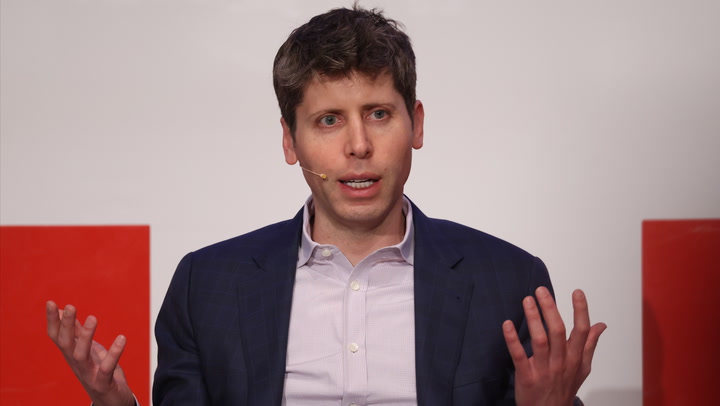
Recently, Sam Altman, the CEO of OpenAI, acknowledged that he is beginning to take the Dead Internet Theory seriously. The premise of this theory is stark: much of what we encounter online may no longer be written by humans, but by bots and large language models.
In other words, what looks like social connection is often little more than automated reflection.
It is a provocative idea. But before declaring the internet "dead," it's worth examining what is really happening and what risks truly deserve our attention.
The Internet Has Always Contained Noise
Digital history is full of artificial signals: spam emails, fake followers, content farms, automated comment bots. For decades, the internet has been cluttered with attempts to get attention.
The difference today is sophistication. Bots now write with fluency, polish, and a degree of coherence that makes them harder to distinguish from human users. They are no longer obvious intruders but blend in seamlessly.
This evolution does not necessarily mean the internet is "dead." It means the challenge of navigating it—of discerning authentic human voices—has become more complex.
The Real Risk: Losing Human Texture
Altman's concern is not entirely misplaced. The greater danger is not the volume of AI-generated content but the homogenisation of discourse.
When every post reads as if it came from the same machine template, the richness of human expression is diminished. We lose the quirks, the tentative questions, the friction of disagreement, and the unfinished thoughts that signal authentic human engagement.
"This is not the death of the internet, but the loss of its texture. A web where conversations feel smoothed out, efficient, and strangely sterile—even when technically 'alive.'"
Is the Internet Truly Dying?
Not yet—but the conversations are drying.
Across the web, vibrant communities, independent creators, researchers, and thinkers continue to build culture and share knowledge. But these voices are harder to surface.
The deeper problem lies with platforms. Incentive structures favor repetition, clickability, and scale. Bots and automated systems thrive in this environment, while thoughtful contributions are often buried.
The risk is not extinction. It is marginalisation: the gradual sidelining of human-centered dialogue in favor of what performs best algorithmically.
Where Philonet Fits In
This is the problem we are working to address at Philonet. Our approach is simple: make thoughts the atomic unit of conversation.
Quote → Thought → Conversation
A quote sparks a thought. A thought sparks dialogue.
Here, AI is not positioned as a competing voice. Instead, it serves a supportive role by adding context, fact-checking claims, and enriching discussions—while keeping the focus squarely on human perspectives.
The internet does not need more noise. It needs spaces designed for reflection, depth, and meaningful exchange.
The Path Forward
Altman's musings on the Dead Internet Theory are valuable not because they confirm a literal decline, but because they highlight urgent questions:
- • Who are we really engaging with online?
- • How do we separate authentic voices from algorithmic echoes?
- • What kinds of platforms will ensure human dialogue remains at the center of digital life?
The internet will not "die" simply because AI-generated content increases. It will die if we stop building places where humans can think, argue, and learn together.
That is the future we are committed to shaping at Philonet.
Think. Post. Connect.
Join the conversation at philonet.ai
Ready to join the thinking revolution?