Why are people having less and less kids?
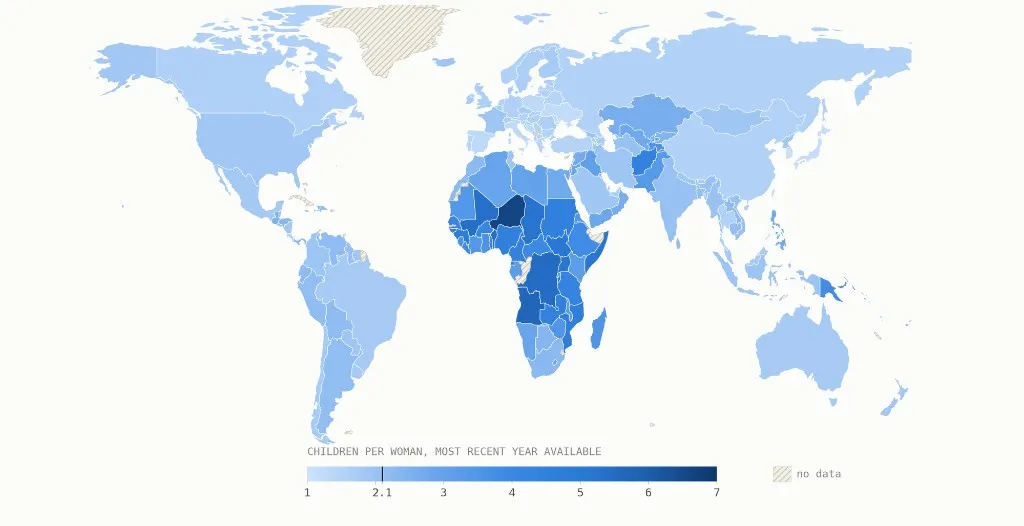
Countries across the world have different histories, different faiths, different cultures and different economic situations, yet they have all ended up on the same side of the same line at roughly the same time.
Most countries are slowly approaching a fertility rate below replacement. The world average is still 2.2, but it is held up by a shrinking handful of places at the other end, and they are falling too.
This made us curious on Philonet, so let me break it down for you based on the discussion on the platform.
Is the economic and financial situation discouraging?
Ask anyone around you and most will say money, or that the future feels too uncertain. It's obviously a satisfying answer, but this is the richest, safest and most medically secure generation human history has ever seen. Both husband and wife are working today, compared to one working person in a house in the past. Women's workforce participation has gone from 23.3% to 41.7% in six years. Unemployment sits at 3.2% and per capita income has gone up from ₹86,647 to about ₹1.72 lakh in a decade. From a purely economic point of view, this is the best time in history to have kids. So has raising a kid quietly become more expensive than it used to be?
To understand the impact of the expenses of raising a kid, we need to compare it to the past when people had more kids.
- 1960s
4.5×a year’s income to raise one
5children per woman
- 1980s
3.3×the cheapest it has ever been
3.6children per woman
- Today
4.3×a year’s income to raise one
2.2children per woman
Children were most expensive when families were largest. So the expense of raising a kid might not be such a big factor.
Has work entered the bedroom?
The corporate world is the next suspect. Work has not gotten heavier for people not having kids but it has gotten lighter. Non parents were spending 245 minutes with each other every day a generation ago and they are spending around 271 minutes from the latest available data. Parental leave exists today which didn't just a few decades ago and a salaried couple today has flexibility their parents would have found unimaginable. The time seems to be there but it is going somewhere other than children, which suggests the corporate office isn't stealing the future babies from the couples.


The shift in the home and inside the bedroom
The average age of marriage keeps climbing up in most countries across the world and the average age for the first kid also climbs up with it. Marriage itself seems to be losing relevance. China recorded 6.1 million marriages in 2024, down from 13.5 million in 2013, and Japan fell below half a million for the first time in ninety years. Underneath all this, there is a strange thing that we have been observing recently. The rising numbers of young adults reporting no sex at all in the past year, in Japan, in America, increasingly in urban India. Gen Z is the generation with the least sex among other active generations.

All of this is pushing the world towards population levels that Elon Musk and others have been raising alarms about. A world with shrinking population is definitely a different world, especially for the countries that are already struggling with labor shortages. But can it be fixed with any temporary changes? Good case for the next discussion.
Ready to join the thinking revolution?